01
Quote
A bounded task gets a signed price and maximum.
One Mac can help. Together, we can build something bigger.
Lithi connects bounded AI work with trusted, opted-in Macs, helping people and small businesses make better use of existing compute with clear checks and honest boundaries.
Circularity here means making better use of existing Macs and returning eligible value to people and small businesses. It is not a claim of zero carbon, avoided manufacturing, guaranteed savings, work, placement or earnings.
Could a trusted Mac closer to the customer be a good fit?Lithi tries to use trusted Macs closer to the customer when it can. Algorithms try the closest safe, matching, available Macs only after safety, task fit, trust, capability and free capacity; Lithi never promises town-local work or exposes topology.
Make better use of Macs people and small businesses already own.
Choose only clear, eligible work with a safe fit.
Run independent checks and policy checks before the result returns.
Signed policy can return eligible value to contributing people and small businesses.
01
A bounded task gets a signed price and maximum.
02
The requester reviews the bound and chooses whether to proceed.
03
Lithi checks fit, trust and capacity, then the Mac runs the work and evidence is checked.
04
The checked result returns with content-free receipt evidence.
These figures are not an additive 90% split.
50% Mac compute provider pool for Macs helping accepted work.
30% only for an eligible attributed customer introduction; otherwise 0.
10% of recruited provider earnings, capped at 5% gross.
Lithi Receipts record content-free evidence of what was checked. They do not replay task content; retention follows the signed task policy.
The signed quote sets the task boundary, assumptions and maximum price for review.
Lithi checks safety, task fit, trust, capability and capacity before eligible work returns.
Receipt evidence records state, policy and checks. Retention follows the signed task policy.

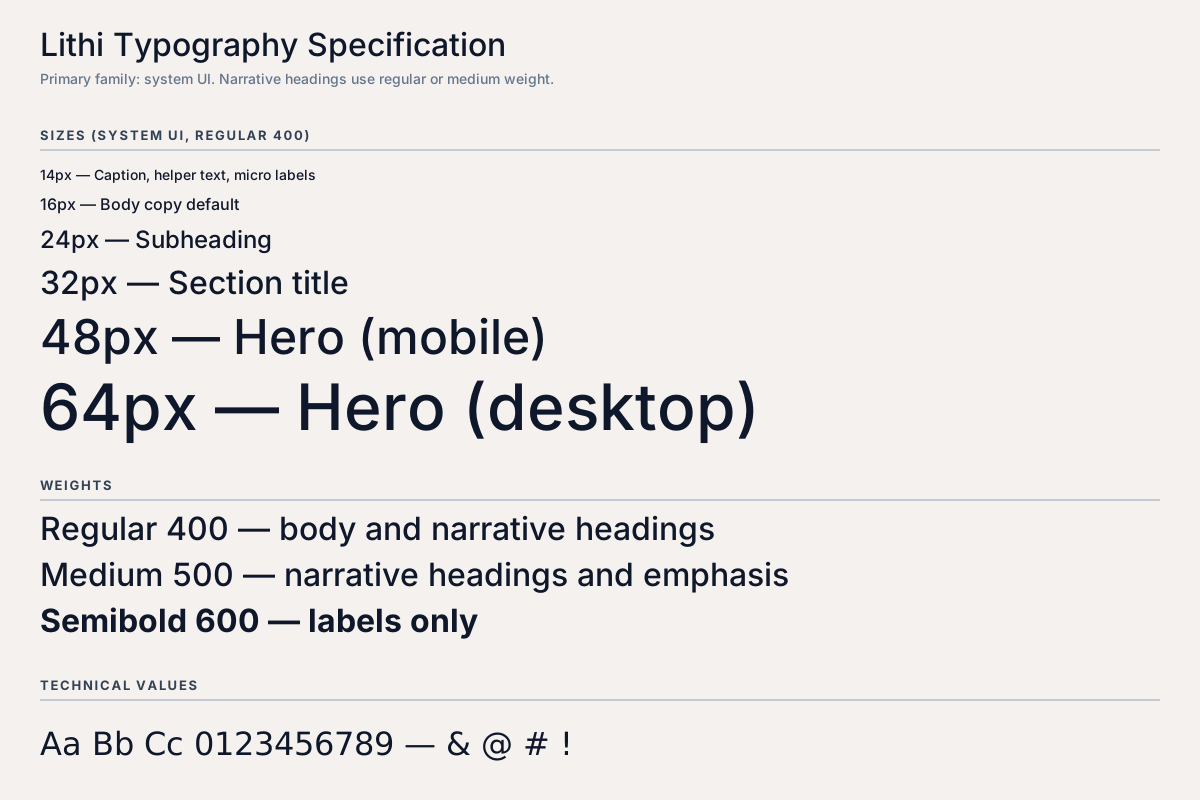
System UI sample
Only approved details will be published.
ASSET_PENDING
ASSET_PENDING
Lithi builds the Agent Network and Lithi Compute Protocol to connect bounded AI work with trusted, opted-in Macs.
Lithi builds its Agent Network and Lithi Compute Protocol, connecting bounded AI work with trusted, opted-in Macs. People and small businesses can make better use of existing Macs while returning eligible value to contributors. Local-first routing weighs safety, task fit, trust, capability, and capacity before proximity. Learn more at https://lithi.ai
Lithi builds an Agent Network and a Compute Protocol for bounded AI work. When a task has a clear outcome and independent checks, Lithi can connect it with a trusted, opted-in Mac that fits the work. Matching considers safety, task fit, trust, capability, and free capacity before proximity. People and small businesses can make better use of Macs they already own while eligible value can return to contributors under signed policy. Content-free receipts make the boundary reviewable. Lithi does not promise local placement, guaranteed savings, work, earnings, or environmental outcomes.
Lithi builds the Agent Network and Lithi Compute Protocol for bounded AI work on trusted, opted-in Macs.
People and small businesses choose whether to opt in their own Macs; participation and value are governed by signed policy.
They use different denominators: a provider pool, an eligible attributed customer introduction, and recruited provider earnings capped at 5% gross—not an additive split.
It tries closer trusted Macs when it can, after safety, task fit, trust, capability and free capacity. Town-local work is never promised.
Receipts provide content-free evidence of checks and boundaries; they do not expose task content or guarantee a result.
The circular framing is about using existing Macs better and returning eligible value. It does not claim zero carbon or avoided manufacturing.